bookkeeping

Spring Is Here. Let’s Tidy Up Your Books!

A Fresh Start for Your Finances This Season 

Spring is the season of clearing clutter, refreshing routines, and getting organized, and your business finances deserve the same energy. Whether you manage your own books or work with a bookkeeping partner, now is the perfect time to pause, review, and tidy up the numbers that keep your business moving. 

A clean set of books isn’t just about accuracy. It’s about clarity. It helps you understand where money is going, how profitable you really are, and what areas need attention before small issues turn into big headaches. This month, we’re diving into how to “spring clean” your books, focusing on reconciliations, cleanup tasks, and even a simple live‑audit style example you can follow. 

Why Spring Is the Perfect Time to Clean Your Books 

Just like your home gathers dust, your books collect clutter over time, duplicate entries, uncategorized transactions, outdated vendors, forgotten invoices, or mismatched balances. Spring is the ideal midpoint between tax season prep and mid-year planning, giving you space to: 

  • Catch errors early 
  • Tighten up processes 
  • Improve your reporting 
  • Identify money leaks 
  • Prepare for stronger Q2–Q4 decisions 

When your books are organized, your business feels lighter, clearer, and easier to manage. 

Step 1: Review Your Chart of Accounts 

Your chart of accounts is the foundation of clean bookkeeping. Over time, business owners often end up with too many categories, unused accounts, or inconsistent naming. Ask yourself: 

  • Does every category still have a purpose? 
  • Are there duplicates? 
  • Are income and expense accounts clearly labeled? 

Cleaning this up helps you and your accountant see a clearer financial picture. 

Step 2: Reconcile All Bank, Credit, and Payment Accounts 

Reconciliation is the heart of bookkeeping cleanup. It ensures your accounting software matches your actual bank balances. Make sure you reconcile: 

  • Checking accounts 
  • Savings accounts 
  • Credit cards 
  • PayPal, Stripe, Square 
  • Loans 
  • Lines of credit 

If the numbers don’t match, dig deeper. Even small discrepancies reveal important issues like double charges, missing deposits, or vendor errors. 

Step 3: Clean Up Past-Due Invoices and Unpaid Bills 

Businesses lose thousands every year simply from lack of follow‑up. Now is the time to: 

  • Send reminders for unpaid invoices 
  • Address long‑overdue customer balances 
  • Remove or write off uncollectible amounts 
  • Verify you’ve paid all outstanding bills 

Streamlining this process helps with cash flow and reduces stress throughout the year. 

Step 4: Review Subscription Spending 

Spring cleaning your books isn’t just about accuracy; it’s about saving money. Log into your bank and card accounts to review: 

  • Monthly software subscriptions 
  • Apps you don’t use anymore 
  • Auto-renewals you forgot about 

Canceling unused tools frees up dollars you can reinvest where it matters. 

Step 5: A Simple “Live Audit” You Can Try Today 

Here’s a quick real‑world example of a mini audit you can do on your books: 

  1. Choose one month from last year, preferably a busy one. 
  1. Open your bank, credit card, and payment processor statements. 
  1. Compare each transaction from your statements to what’s recorded in your bookkeeping software. 
  1. Look for missing transactions, duplicates, or incorrectly categorized items. 
  1. Flag anything that doesn’t make sense. 

Most business owners are shocked at finding subscription duplicates, old vendor charges, or missing income that never made it into their books. This simple audit can instantly improve accuracy and confidence. 

Step 6: Refresh Your Processes 

A clean set of books is great, but a clean system is even better. Consider setting up or improving: 

  • Automations for recurring expenses 
  • Bank rules in QuickBooks or Xero 
  • Digital receipt management 
  • A weekly or monthly bookkeeping check‑in 
  • Secure access control for financial documents 

Consistency prevents clutter from building back up. 

A Fresh Financial Start 

Spring cleaning your books helps you realign your goals, tighten your operations, and prepare for a strong year ahead. Your financial clarity impacts everything pricing, hiring, growth, cash flow, and peace of mind. 

If you need help conducting a deeper audit or want a bookkeeping partner to keep things clean all year long, our team at Richardson Professional Solutions is ready to support you. 

Book your consultation today!

Spring Is Here. Let’s Tidy Up Your Books! Read More »
Avoid the Tax‑Season Scramble: How to Prepare for Your CPA Visit 

Tax season doesn’t have to feel overwhelming. In fact, most tax‑season stress comes from one simple issue: lack of preparation. 

Many business owners aren’t sure what their CPA actually needs—or when they should start gathering it. The result is rushed meetings, unanswered questions, and missed opportunities. 

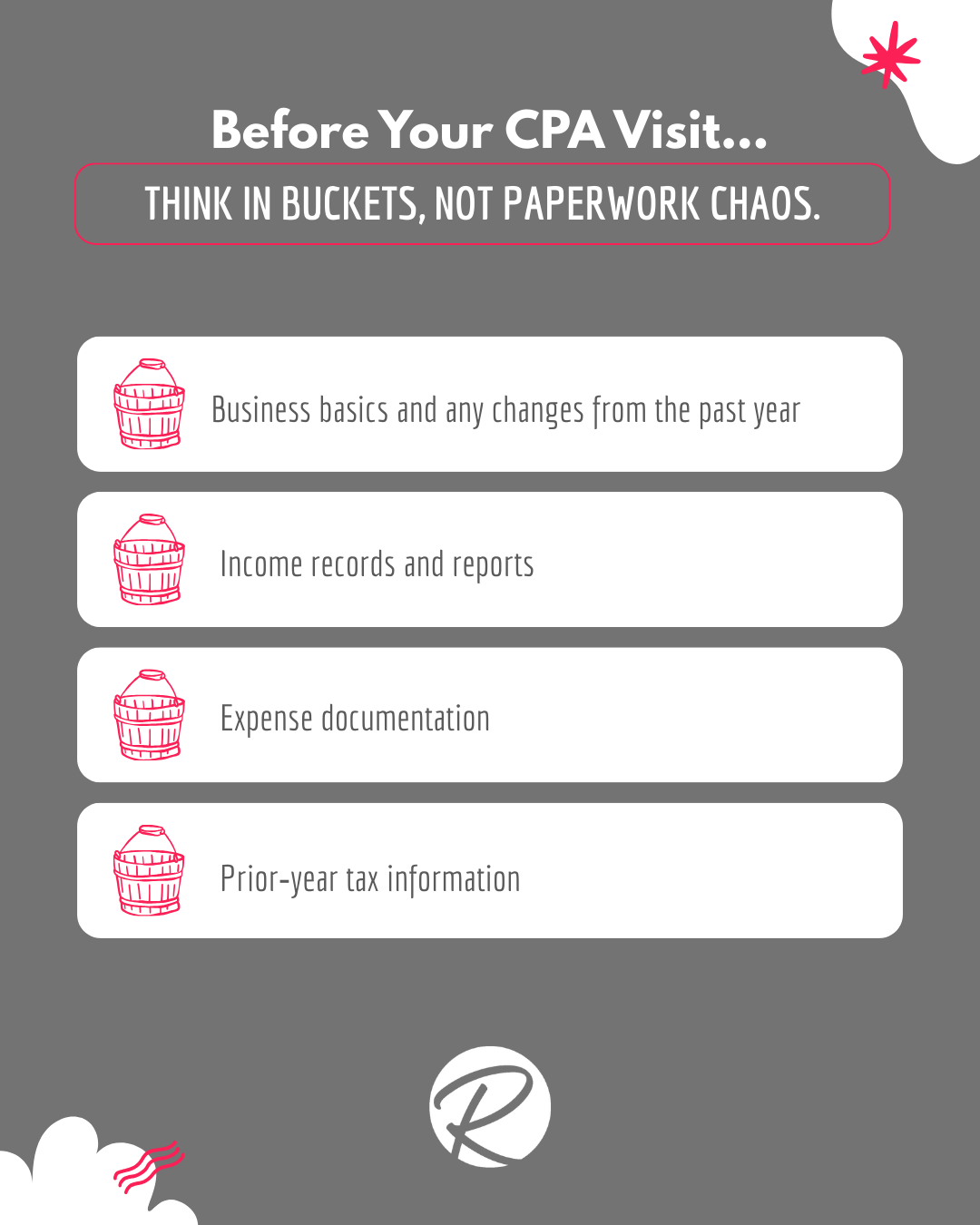
Start With the Right Documents 

Instead of thinking in terms of piles of paperwork, think in buckets: 

A good rule of thumb: if money hits your bank account, it likely needs to be reported. 

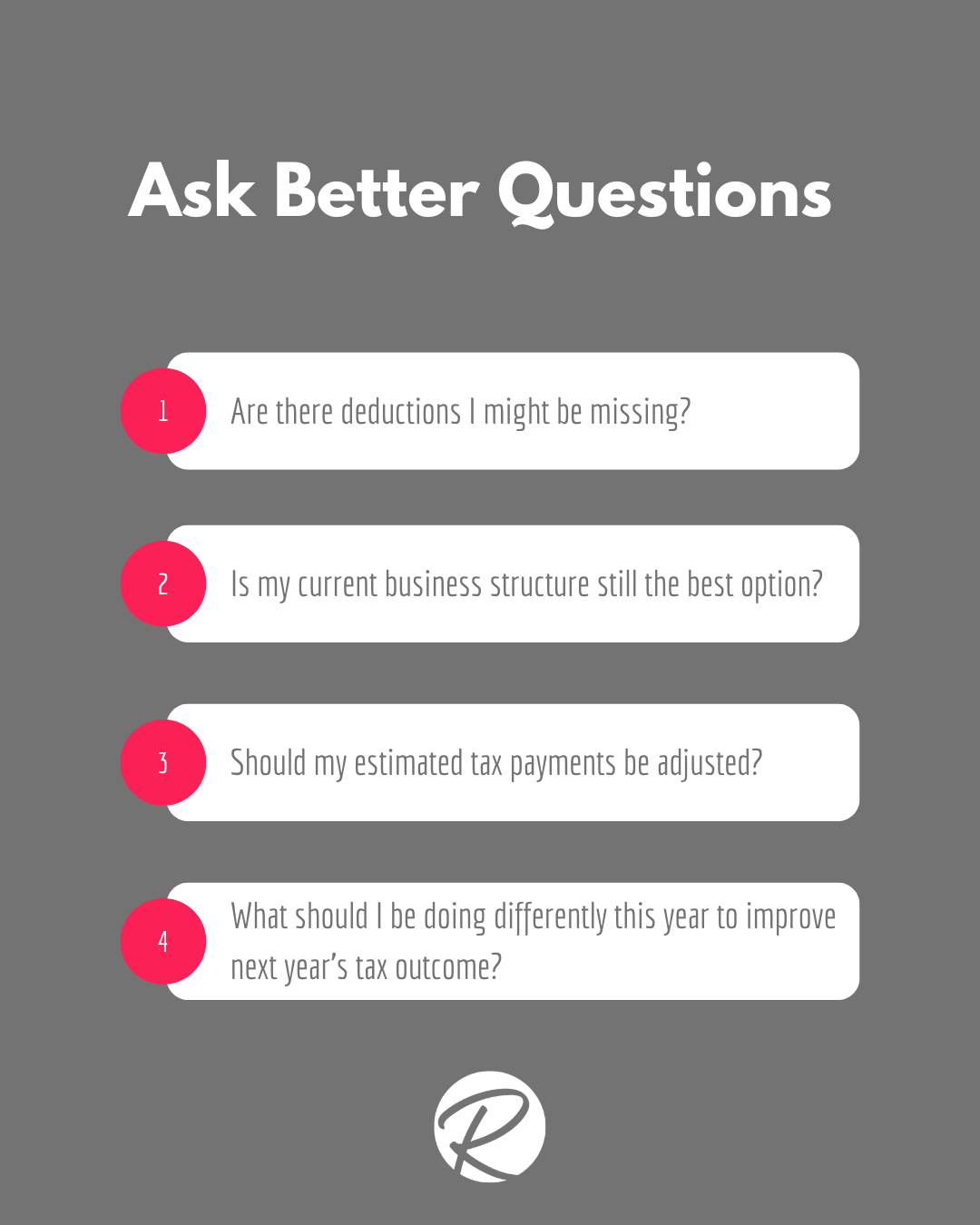
Ask Better Questions 

Your CPA is more than a tax filer—they’re a strategic partner. Come prepared to ask questions like: 

Avoid Common Mistakes 

Some of the most common tax‑time issues include mixing personal and business finances, missing transactions, guessing numbers, and waiting too long to ask questions. These mistakes are common—and avoidable. 

Stay Organized All Year 

Simple habits make a big difference: 

  • Monthly reviews of your accounts and Profit & Loss 
  • Quarterly check‑ins on estimated taxes 
  • Annual year‑end planning conversations 

The takeaway? Preparation saves time, money, and stress. Organization matters more than perfection, and better questions lead to better outcomes. 

If you’d like help staying organized or preparing for your CPA visit, our team is happy to support you. 

Avoid the Tax‑Season Scramble: How to Prepare for Your CPA Visit  Read More »

Tips On Working with Your Bookkeeper

Ah, summer—the season of sunshine, vacations, and relaxation. But while you are soaking up the sun, your business’s financial health should not be on vacation as well. We are here with some essential tips for maintaining a smooth and effective relationship with your bookkeeper. Clear communication and proactive organization can make all the difference when it comes to managing your business’ finances.

Clear and Constant Communication: Clear communication lies at the heart of continuous successful collaboration with your bookkeeper. Whether it is sending receipts promptly or updating them on significant financial events, keeping the lines of communication open ensures your bookkeeper can accurately categorize expenses and maintain an up-to-date financial record. Remember, timely information prevents last-minute scrambles during tax season and helps in making informed financial decisions throughout the year.

Document Significant Events: Did you sell an asset, acquire new equipment, or secure a business loan? These events impact your financial statements. Providing your bookkeeper with sales documents, loan agreements, and other relevant paperwork ensures these transactions are properly recorded on your balance sheet. This proactive approach not only maintains accuracy but also simplifies audits and financial reviews.

Payroll Matters: From hiring to termination, every change in your workforce should be promptly communicated to your bookkeeper. Details such as hiring information, bonuses, cash advances, and termination notices are crucial for accurate payroll processing. By keeping your bookkeeper informed, you minimize the risk of payroll errors and ensure your employees are compensated correctly and on time.

Real-Time Recording: Avoid the year-end scramble by recording transactions in real time. Providing your bookkeeper with timely updates, complete with notes and attachments, streamlines the accounting process and reduces stress during tax season. This initiative will keep your financial records accurately up to date and allows your CPA to work efficiently when preparing your taxes.

Share Everything (Yes, Everything!): Remember, when it comes to financial information, there is no such thing as too much detail. Your bookkeeper would rather have more information than necessary than miss critical details that could impact your financial statements. Whether it is an unexpected expense, a new revenue stream, or a regulatory change, keeping your bookkeeper informed ensures that your financial records reflect the true state of your business.

Take a moment to review your financial and communication processes with your bookkeeper. Here is to a productive summer—and a well-managed financial future!

Tips On Working with Your Bookkeeper Read More »