rps_admin

Is Your Tech Ready for Summer? A Simple Guide to IT Infrastructure Compliance

Summer brings vacations, flexible schedules, and more remote work. But it also creates new risks for your business technology.

If your IT systems are not prepared, small issues can turn into costly disruptions.

This guide will help you check your systems, reduce risk, and stay compliant.


Why Summer Can Be Risky for Your IT Systems

During the summer months, businesses often face:

  • Fewer staff available to manage systems
  • More employees working remotely
  • Increased cybersecurity risks
  • Higher temperatures that can affect hardware

Without a plan, these issues can impact productivity, security, and compliance.


1. Review Your IT Systems and Equipment

Start by taking a close look at your current setup.

Ask yourself:

  • Are all systems up to date?
  • Are any devices outdated or unsupported?
  • Do you have a clear inventory of your equipment?

Keeping accurate records makes it easier to manage security, performance, and compliance.


2. Keep Software Updated

Software updates are critical.

They often include:

  • Security patches
  • Bug fixes
  • Performance improvements

If systems are not updated, they become easy targets for cyber threats.

Set up automatic updates where possible.


3. Check Your Security and Access Controls

Make sure the right people have the right level of access.

  • Remove access for former employees
  • Limit admin privileges
  • Review password policies

This reduces the risk of unauthorized access or data breaches.


4. Prepare for Remote Work and Travel

Summer often means more people working from home or on the go.

To stay secure:

  • Use secure VPN connections
  • Require multi-factor authentication
  • Ensure devices are protected

Remote work should never weaken your security.


5. Test Your Backup and Recovery Plan

Backups are essential—but only if they work.

Make sure:

  • Backups run regularly
  • Files can be restored quickly
  • Your team knows the recovery process

Testing your plan now can prevent major data loss later.


6. Plan for Staff Absences

With vacations and time off, make sure coverage is in place.

  • Document IT processes
  • Assign backup responsibilities
  • Ensure access to critical systems

This keeps operations running smoothly even when key team members are away.


7. Stay Compliant with Industry Standards

Compliance means following rules that protect your systems and data.

This may include:

  • Data protection regulations
  • Security standards
  • Internal policies

Regular reviews help ensure your business stays compliant and avoids penalties.


8. Monitor Your Systems Regularly

Ongoing monitoring helps you catch problems early.

Look for:

  • Unusual activity
  • System performance issues
  • Security alerts

The earlier you detect a problem, the easier it is to fix.


Prepare Now, Stay Focused Later

Getting your IT systems ready for summer does not have to be complicated.

Focus on:

  • Keeping systems updated
  • Strengthening security
  • Preparing your team

A few proactive steps now can prevent bigger issues later.


Not sure if your systems are ready?

RPS can help you review your technology, improve security, and stay compliant, so you can focus on running your business.

Is Your Tech Ready for Summer? A Simple Guide to IT Infrastructure Compliance Read More »

Spring Is Here. Let’s Tidy Up Your Books!

A Fresh Start for Your Finances This Season 

Spring is the season of clearing clutter, refreshing routines, and getting organized, and your business finances deserve the same energy. Whether you manage your own books or work with a bookkeeping partner, now is the perfect time to pause, review, and tidy up the numbers that keep your business moving. 

A clean set of books isn’t just about accuracy. It’s about clarity. It helps you understand where money is going, how profitable you really are, and what areas need attention before small issues turn into big headaches. This month, we’re diving into how to “spring clean” your books, focusing on reconciliations, cleanup tasks, and even a simple live‑audit style example you can follow. 

Why Spring Is the Perfect Time to Clean Your Books 

Just like your home gathers dust, your books collect clutter over time, duplicate entries, uncategorized transactions, outdated vendors, forgotten invoices, or mismatched balances. Spring is the ideal midpoint between tax season prep and mid-year planning, giving you space to: 

  • Catch errors early 
  • Tighten up processes 
  • Improve your reporting 
  • Identify money leaks 
  • Prepare for stronger Q2–Q4 decisions 

When your books are organized, your business feels lighter, clearer, and easier to manage. 

Step 1: Review Your Chart of Accounts 

Your chart of accounts is the foundation of clean bookkeeping. Over time, business owners often end up with too many categories, unused accounts, or inconsistent naming. Ask yourself: 

  • Does every category still have a purpose? 
  • Are there duplicates? 
  • Are income and expense accounts clearly labeled? 

Cleaning this up helps you and your accountant see a clearer financial picture. 

Step 2: Reconcile All Bank, Credit, and Payment Accounts 

Reconciliation is the heart of bookkeeping cleanup. It ensures your accounting software matches your actual bank balances. Make sure you reconcile: 

  • Checking accounts 
  • Savings accounts 
  • Credit cards 
  • PayPal, Stripe, Square 
  • Loans 
  • Lines of credit 

If the numbers don’t match, dig deeper. Even small discrepancies reveal important issues like double charges, missing deposits, or vendor errors. 

Step 3: Clean Up Past-Due Invoices and Unpaid Bills 

Businesses lose thousands every year simply from lack of follow‑up. Now is the time to: 

  • Send reminders for unpaid invoices 
  • Address long‑overdue customer balances 
  • Remove or write off uncollectible amounts 
  • Verify you’ve paid all outstanding bills 

Streamlining this process helps with cash flow and reduces stress throughout the year. 

Step 4: Review Subscription Spending 

Spring cleaning your books isn’t just about accuracy; it’s about saving money. Log into your bank and card accounts to review: 

  • Monthly software subscriptions 
  • Apps you don’t use anymore 
  • Auto-renewals you forgot about 

Canceling unused tools frees up dollars you can reinvest where it matters. 

Step 5: A Simple “Live Audit” You Can Try Today 

Here’s a quick real‑world example of a mini audit you can do on your books: 

  1. Choose one month from last year, preferably a busy one. 
  1. Open your bank, credit card, and payment processor statements. 
  1. Compare each transaction from your statements to what’s recorded in your bookkeeping software. 
  1. Look for missing transactions, duplicates, or incorrectly categorized items. 
  1. Flag anything that doesn’t make sense. 

Most business owners are shocked at finding subscription duplicates, old vendor charges, or missing income that never made it into their books. This simple audit can instantly improve accuracy and confidence. 

Step 6: Refresh Your Processes 

A clean set of books is great, but a clean system is even better. Consider setting up or improving: 

  • Automations for recurring expenses 
  • Bank rules in QuickBooks or Xero 
  • Digital receipt management 
  • A weekly or monthly bookkeeping check‑in 
  • Secure access control for financial documents 

Consistency prevents clutter from building back up. 

A Fresh Financial Start 

Spring cleaning your books helps you realign your goals, tighten your operations, and prepare for a strong year ahead. Your financial clarity impacts everything pricing, hiring, growth, cash flow, and peace of mind. 

If you need help conducting a deeper audit or want a bookkeeping partner to keep things clean all year long, our team at Richardson Professional Solutions is ready to support you. 

Book your consultation today!

Spring Is Here. Let’s Tidy Up Your Books! Read More »

Marketing That Moves the Needle

Marketing doesn’t work by accident it works through intentional strategy, clear messaging, and consistent execution. As busy entrepreneurs, it’s easy to fall into the trap of “posting just to post” or relying on outdated website content and generic email blasts. But in 2026, your marketing has to do more than exist. It has to convert. 

This month, we’re focusing on two of your most powerful (and often overlooked) marketing tools: your website and your email list. These platforms belong to you, not social media, and when used strategically, they become your most reliable sources of traffic, trust, and leads. 

Why Website + Email Marketing Still Matter Most 

Social media is flashy, but your website and email list are yours. Algorithms can shift, platforms can change, and trends move quickly. But your owned platforms remain consistent, trackable, and profitable. A strong website and email strategy help you: 

  • Reach customers intentionally 
  • Improve discoverability 
  • Nurture long-term relationships 
  • Drive consistent conversions 
  • Communicate your expertise clearly 

Think of your website as your storefront and your emails as your ongoing conversation. When both work together, you create a predictable system for growth. 

How to Strengthen Your Website 

Your website should work harder than you do. Here’s how to make sure it does. 

1. Start With Clear Messaging: Visitors should know exactly what you do within three seconds. Update your homepage to include: 

  • A clear headline 
  • A simple summary of who you help 
  • A strong call-to-action (“Book a Consultation,” “Get a Free Quote,” etc.) 

Clarity outranks creativity every time. 

2. Refresh Your About + Services Pages: Your website should reflect where your business is now, not three years ago. Make sure your copy: 

  • Matches your current offerings 
  • Speaks to your ideal audience 
  • Highlights what sets you apart 

This is especially important for service-based industries like law, nonprofits, home services, and consulting. 

3. Optimize for Mobile: More than half of visitors view websites on mobile devices. If your site is slow, cluttered, or hard to read, people won’t stay. Test your entire site on your phone and fix anything that feels off. 

4. Add Social Proof: Testimonials, case studies, donor impact statements, before-and-after results, or client spotlights build credibility and help website visitors trust you faster. 

5. Update Photos + Visuals: Fresh visuals create instant interest. If you haven’t updated branding images or team photos recently, spring is a great time. 

Email Marketing That Actually Works 

Email remains one of the highest-converting marketing tools when done well. The key is being consistent, strategic, and helpful. 

1. Segment Your Audience: Not all subscribers want the same content. Segment by: 

  • Service type 
  • Location 
  • Donor vs. client vs. newsletter reader 
  • Industry 

Targeted emails feel personal and convert better. 

2. Create a Monthly Email Strategy: Consistency beats frequency. Consider these monthly email types: 

  • A value-packed educational email 
  • A client story or case study 
  • A promotional offer or service highlight 
  • A simple check-in or resource roundup 

A structured plan keeps you from scrambling last-minute. 

3. Use Templates to Save Time: Templates reduce decision fatigue and keep your brand consistent. Create templates for: 

  • Announcements 
  • Newsletters 
  • Event reminders 
  • Welcome sequences 
  • Service promotions 

You can even batch-create Q3 and Q4 templates now to get ahead. 

4. Include a Clear Call-to-Action: Every email should guide your reader to take one action. Examples: 

  • “Download the guide” 
  • “Book a strategy call” 
  • “Read the blog” 
  • “Share with a friend” 

Confused readers don’t convert, guided readers do. 

Bring It All Together With a Simple Strategy Session 

Set aside one hour this month and review the two areas that matter most: 
Your website: Does it clearly represent who you are and what you offer? 
Your email marketing: Does it nurture relationships and drive conversions? 

If not, make a list of 3–5 updates you can implement this quarter. Small improvements create big results over time. 

Marketing That Truly Moves the Needle 

Real marketing isn’t about doing everything; it’s about doing the right things consistently. Your website and email list are powerful, cost-effective tools that can help you attract the right audience, build trust, and create momentum all year long. 

If you’d like help reviewing your website, building email templates, or creating a monthly strategy, our team at Richardson Professional Solutions is ready to support you. 
Book your consultation today!

Marketing That Moves the Needle Read More »

Avoid the Tax‑Season Scramble: How to Prepare for Your CPA Visit 

Tax season doesn’t have to feel overwhelming. In fact, most tax‑season stress comes from one simple issue: lack of preparation. 

Many business owners aren’t sure what their CPA actually needs—or when they should start gathering it. The result is rushed meetings, unanswered questions, and missed opportunities. 

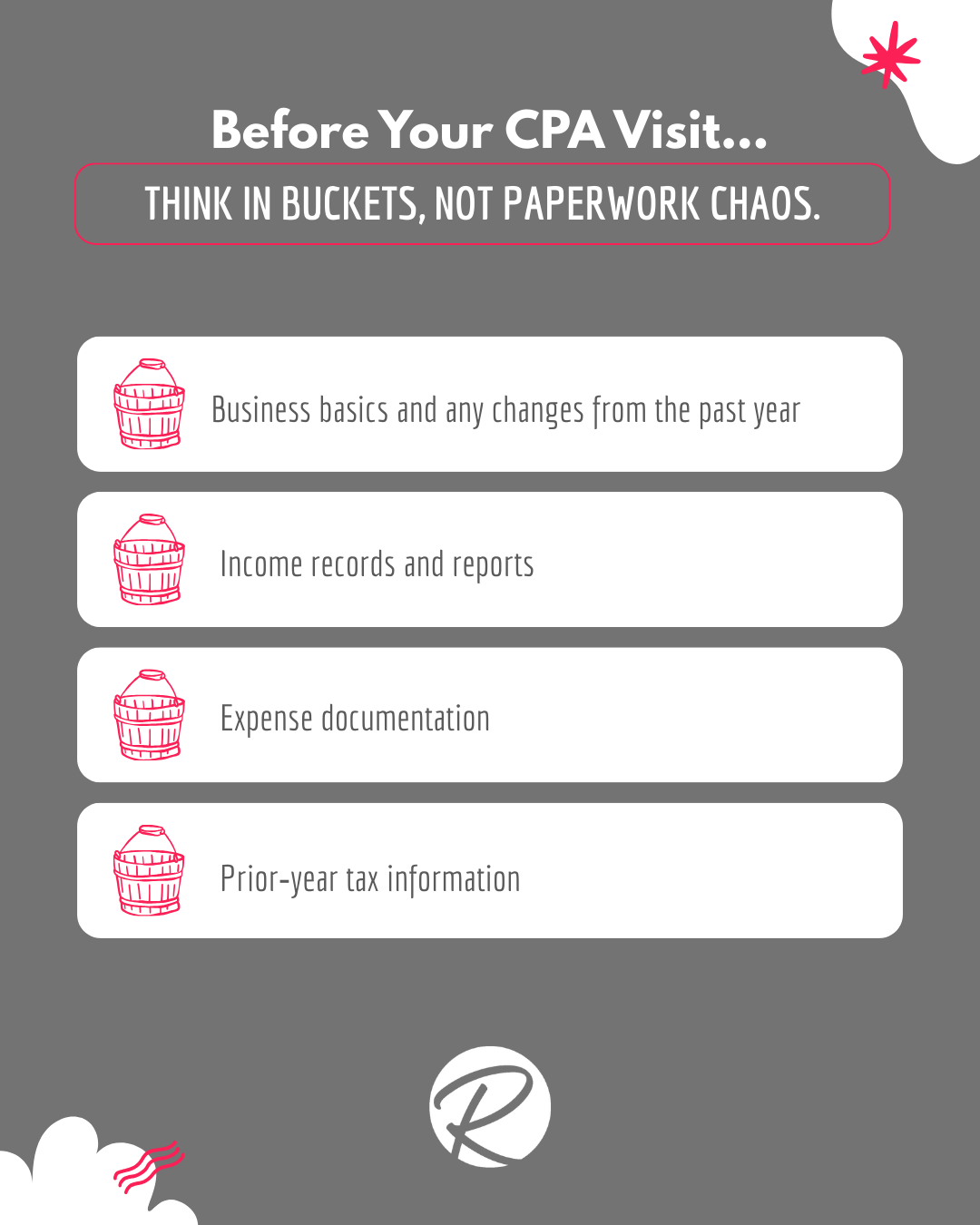
Start With the Right Documents 

Instead of thinking in terms of piles of paperwork, think in buckets: 

A good rule of thumb: if money hits your bank account, it likely needs to be reported. 

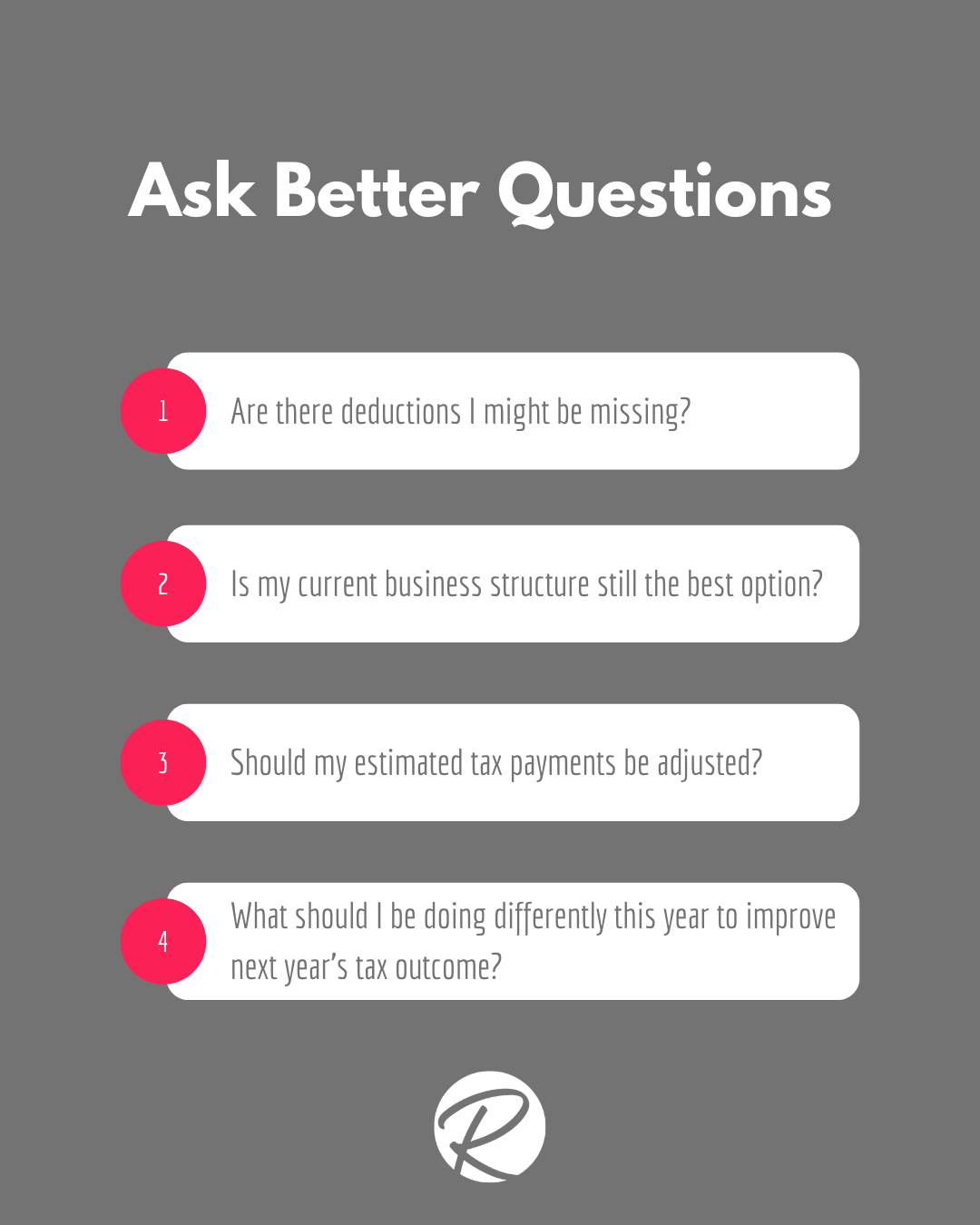
Ask Better Questions 

Your CPA is more than a tax filer—they’re a strategic partner. Come prepared to ask questions like: 

Avoid Common Mistakes 

Some of the most common tax‑time issues include mixing personal and business finances, missing transactions, guessing numbers, and waiting too long to ask questions. These mistakes are common—and avoidable. 

Stay Organized All Year 

Simple habits make a big difference: 

  • Monthly reviews of your accounts and Profit & Loss 
  • Quarterly check‑ins on estimated taxes 
  • Annual year‑end planning conversations 

The takeaway? Preparation saves time, money, and stress. Organization matters more than perfection, and better questions lead to better outcomes. 

If you’d like help staying organized or preparing for your CPA visit, our team is happy to support you. 

Avoid the Tax‑Season Scramble: How to Prepare for Your CPA Visit  Read More »

Brand Love: How to Build a Strong Identity That Attracts the Right Audience 

February is known as the month of love, but it’s also the perfect time to fall back in love with your brand or help your audience fall in love with it for the first time. A strong brand identity goes far deeper than a logo, color palette, or catchy headline. It’s the way people feel when they interact with your business, the story you tell, and the promises you consistently keep. 

Whether you’re a small nonprofit, a solo entrepreneur, a growing law firm, or a home services provider, your brand sets the tone for trust, loyalty, and long-term growth. This month, we’re exploring what it means to build “brand love” and how you can strengthen your identity through intentional marketing and thoughtful brand management. 

Why Brand Identity Matters More Than Ever 

Today’s audience has options. Competitors are everywhere; attention spans are short, and consumers expect authenticity. 

People don’t fall in love with businesses; they fall in love with brands that feel human, relatable, and reliable. This will be even more important as ever, as our interactions with AI drastically increase as consumers; we are going to be craving connection even more! 

The Core Elements of a Strong Brand Identity 

To create a brand your audience truly connects with, focus on these essential components: 

1. Your Brand Story 

Your brand story should share why you do what you do. It doesn’t have to be dramatic or complicated, simply authentic and clear. People resonate with purpose. Think: 

  • Why did you start your business? 
  • What problems are you passionate about solving? 
  • What values guide you? 

A great brand story helps you emotionally connect with clients long before they hire you. 

2. Your Voice + Personality 

Your brand’s voice should match the experience clients can expect from you. Are you bold? Warm? Professional? Conversational? Consistent use of tone builds trust. 

Tip: Keep a simple brand voice guide so your team uses the same language across emails, social posts, proposals, and client communication. 

3. Your Visual Identity 

This includes your logo, fonts, photography style, and color palette. It should be cohesive across all platforms. Conflicting visuals causes confusion; cohesion creates confidence. 

4. Your Ideal Audience 

Branding only works if it speaks to the right people. Clarify: 

  • Who do you serve best? 
  • What problems are they facing? 
  • What do they value most? 
  • What motivates them to say “yes”? 

When your message aligns with your audience’s needs, your brand becomes irresistible. 

How to Build Brand Love in 2026

Whether you’re refreshing your brand or building one from scratch, here are simple steps to strengthen your identity this year: 

Branding Workshop Tip: Engage Your Team 

If your business has a team, hold a simple branding workshop. Ask everyone: 

  • What does our brand stand for? 
  • How do we want customers to describe us? 
  • What makes us different? 
  • What feelings do we want to create? 

Your team sees your brand from angles you don’t, and their insights can help refine your messaging. 

Brand Love Starts with Clarity 

When your brand identity is strong, clients understand who you are before they ever meet you. They feel connected to your mission, confident in your expertise, and excited to work with you. The more intentional you are about shaping that experience, the more powerful and profitable your brand becomes. 

If you’d like help auditing or refreshing your brand in 2026, our team at Richardson Professional Solutions is here to guide you every step of the way. 

Brand Love: How to Build a Strong Identity That Attracts the Right Audience  Read More »

Setting Up Autopay in QuickBooks Online (QBO)

Learn how to set up automatic payments for recurring invoices! QuickBooks Online’s Autopay lets you make payments for recurring invoices automatically. You can sign up and enter your payment info through the invoice. Your payments will process automatically for future recurring invoices.

To setup Autopay:
1. Open your invoice and select “Set up autopay” to enroll.
2. Next, you will need to sign in using an Intuit user ID (also used for TurboTax and Mint). If you need to set one up, please see further instructions below.
3. You need to make sure the autopay checkbox shows as selected and displays the correct frequency and start date.
4. Once everything looks good, select the Autopay button to pay the current invoice. You will receive a confirmation email that Autopay is set up.

_____________________________________________

**Why am I still receiving an invoice via email, I am set up on Autopay?**
You will receive the invoice email normally, but it should reflect a zero balance, pending payment, or Autopay scheduled payment depending on the due date for the invoice.

**Can I change the amount of the Autopay?**
Autopay can only be set up for the full amount. If you edit the amount, then the Autopay option no longer displays.

**How do I set up an Intuit account?**
You need an Intuit account to use Autopay. If you don’t have an Intuit account, you’ll need to create a new login (https://accounts.intuit.com/index.html?_ga=2.176293925.1061788638.1732654131-1548149096.1708010766).

**What kind of payment methods can I use to set up an Autopay?**
You can use debit or credit card, or ACH transactions.

**When will my payment be processed?**
Auto payments are deducted either:
– 3 days before the invoice due date;
– immediately if it’s less than 3 days, if an invoice is due on receipt; or
– as soon as the invoice is batched, if the invoice is due on receipt.

**How do I update my payment method(s) already set up in Autopay?**
You can select “Manage Payment” in the autopay confirmation email to update payment info. Some credit cards should auto-update the expiry date on the stored credit card with the new info. If you would like to make the change manually, you can cancel the autopay and set up a new autopay with different card details.

**Can I cancel my Autopay?**
You can cancel autopay from your Autopay confirmation email. Select “Manage payment” in the confirmation email. Sign into your Intuit Account. Select “Cancel autopay”. If Autopay gets canceled, you will receive a cancelation email for future Autopay transactions. Note: Individual payments can’t be canceled.

**What if my payment gets declined?**
If a payment is declined, an email is sent to you to let you know. Once the payment info is updated, the payment will be taken immediately. You can also choose to re-enroll in Autopay with the new info.

Setting Up Autopay in QuickBooks Online (QBO) Read More »

Cross-Generational Communication

“This meeting could have been an email.” Sound familiar?

With many tenured employees delaying their retirements, our workplaces have up to four generations working concurrently for the first time in history! This can cause some friction at times between generations, as we all prefer to communicate in different ways. Let’s review a few ways to improve cross-generational communication and work proactively to avoid miscommunications and friction.

• Understand Generational Preferences: Recognize that different generations have distinct communication styles.
• Encourage Open Dialogue: Create an environment where team members feel comfortable sharing their communication preferences and concerns.
• Use Multiple Communication Channels: Integrate various communication methods to cater to diverse preferences.
• Avoid Stereotypes: Treat each individual as unique rather than making any assumptions based on their generational cohort.
• Set Clear Expectations: Establish clear communication guidelines and expectations for the team.
(i.e. response times, preferred communication channels, and meeting protocols)
• Promote Inclusivity: Ensure that all voices are heard during meetings and discussions, regardless of age or seniority to foster a sense of belonging and respect.
• Be Flexible and Adaptable: Be willing to adjust your communication style to meet the needs of different team members to enhance understanding and collaboration.
• Encourage Mentorship: Pair employees from different generations in mentorship programs to facilitate knowledge sharing and improve mutual understanding.
• Foster a Culture of Respect: Emphasize the importance of respecting each other’s viewpoints and experiences.

Would you like to learn more about this topic? Reach out to use to find out how we can lead a session for you and your team.

Cross-Generational Communication Read More »

Managing Difficult Clients

Working with clients, or customers, can be difficult at times. Saying the right thing, maintaining the relationship, making them feel heard…it can be a lot to manage. Let’s review some ways to manage those difficult clients when they come around.

• Stay Calm and Professional: Maintain a calm demeanor and professional tone, even if the client is upset.
• Listen Actively: Acknowledge their concerns and repeat back what they’ve said.
• Empathize: Show empathy by understanding their frustration and validating their feelings.
• Set Clear Boundaries: Clearly communicate what is and isn’t possible within the given constraints.
• Stay Positive: Maintain a positive attitude, even in challenging situations, to help de-escalate tension.
• Offer Solutions: Focus on finding a solution rather than dwelling on the problem.
• Follow Up: After resolving an issue, follow up with the client to ensure they are satisfied with the outcome.
• Document Everything: Keep detailed records of all interactions and agreements to avoid misunderstandings.
• When all else fails: Escalate it.

Would you like to learn more about this topic? Reach out to use to find out how we can lead a session for you and your team.

Managing Difficult Clients Read More »

Enhancing Team Dynamics

Working as a team in modern times can be trying. Your team may be on-site, remote, or a hybrid of both. Staying aligned is key, so let’s dive into ways to stay on track!

Team Building Strategies
• Promote a Respectful Environment: Ensure every team member feels valued and respected by fostering an inclusive culture.
• Open Communication Channels: Implement systems for transparent communication, such as anonymous feedback tools and regular all-hands meetings.
• Articulate a Clear Vision: Hold regular meetings to update your team on the company’s goals and progress.
• Define Team Roles: Clearly define roles and responsibilities to avoid overlap and confusion.
• Trust in Your Team: Avoid micromanaging and trust your team to perform their tasks effectively.

Enhancing Team Dynamics
• Encourage Collaboration: Foster a culture of collaboration by promoting teamwork and collective problem-solving.
• Provide Constructive Feedback: Regularly offer feedback that helps team members grow and improve.
• Resolve Conflicts Quickly: Address conflicts as soon as they arise to prevent them from escalating.
• Foster Mutual Respect: Encourage team members to respect each other’s ideas and contributions.

Aligning Team Interactions & Communications
• Use Technology: Leverage collaboration tools like Slack, Microsoft Teams, or Asana to keep everyone connected.
• Regular Check-Ins: Schedule regular check-ins and meetings to ensure everyone is aligned and informed.
• Cross-Functional Projects: Create projects that require collaboration between different offices to build stronger inter-office relationships.
• Standardize Processes: Implement standardized processes across all offices to ensure consistency.
• Encourage Transparency: Promote a culture of transparency where information is freely shared across teams.

Would you like to learn more about this topic? Reach out to use to find out how we can lead a session for you and your team.

Enhancing Team Dynamics Read More »

Pushing Back Against Stress

These days we are all doing more with less, which can lead to stress! Let’s take a moment to reflect on a few quick and effective ways to push back against stress:

1. Take deep breaths
2. Listen to music
3. Get up and stretch
4. Go for a walk
5. Eat a nutritious snack
6. Hydrate!

Make sure you are taking a moment to take care of yourself, as “You can’t pour from an empty cup”.

Would you like to learn more about this topic? Reach out to use to find out how we can lead a session for you and your team.

Pushing Back Against Stress Read More »